

iQ1550 and Jobsite Health: Dust Control Starts at the Cut
A masonry cutting station is part of a shared workplace. The operator makes the cut, but tenders, laborers and neighboring trades may also work near the dust it produces. Controlling that dust is a decision about the people on the jobsite as well as the material moving through the saw.
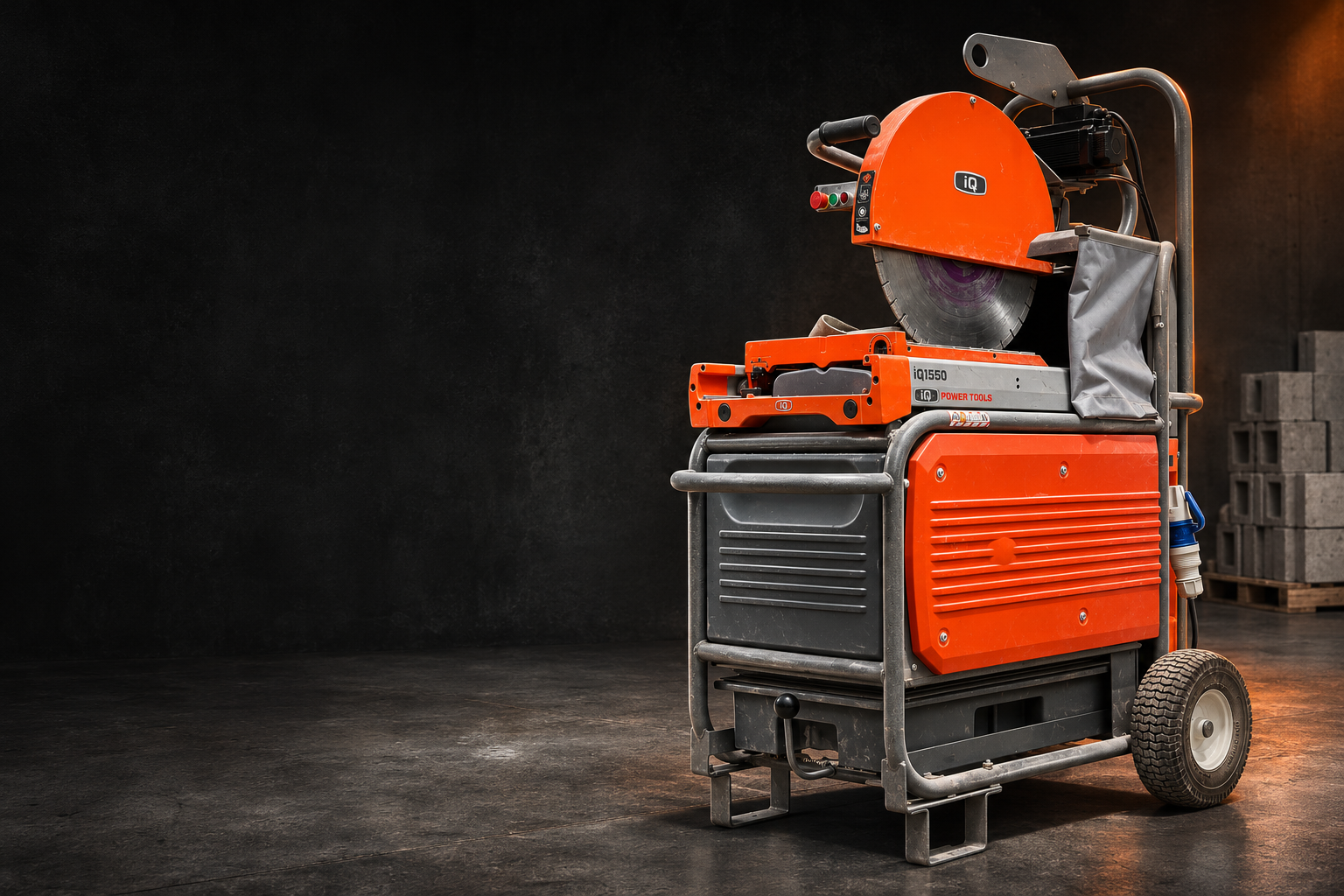
The iQ1550 dry-cut masonry saw brings integrated dust collection to this daily task. It is now available at a new lower price of $10,999. The blade is sold separately.
Why silica exposure deserves attention
Concrete, brick and many natural stones contain crystalline silica. Cutting those materials can generate respirable crystalline silica: particles small enough to travel deep into the lungs. Excessive exposure can cause silicosis, an irreversible lung disease, and can also cause lung cancer, chronic obstructive pulmonary disease and kidney disease. NIOSH explains these health risks.
The consequences may develop long after a particular job is finished. The time between exposure and symptoms depends on both the intensity and duration of exposure; very high exposures can cause disease much sooner. Prevention starts with the task that creates the dust and the controls used each time it is performed.
Capture dust close to the cut
Engineering controls address exposure through the equipment or work environment. Local dust extraction draws dust toward a collection system close to where the dust is generated. NIOSH places engineering controls above administrative measures and personal protective equipment in its hierarchy of controls.
The iQ1550 applies that principle with an integrated vacuum and three-stage HEPA filtration. Its 21.5-inch blade provides up to an 8-inch cutting depth, and its collection system holds up to 75 pounds of dust. It cuts without water, removing the need to supply cutting water or manage cutting slurry from that operation.
Filtration is one part of exposure control
HEPA describes a filter's performance. It does not mean a saw captures every particle generated or that every jobsite exposure is controlled. A collection system's effectiveness depends on capturing dust, keeping the system in good condition and matching the control method to the work. A filter specification alone cannot establish the silica concentration in a worker's breathing zone.
Considering nearby workers is equally important. Cutting location, access to the work area and other dust-producing activities belong in the plan. Grinding, drilling and cleanup can contribute additional exposure. Supervisors should consider the work happening around the saw when deciding how to protect the crew.
Maintain the system and handle collected dust carefully
Good practices must continue through maintenance and cleanup. Follow the manufacturer's instructions for inspecting the collection system, servicing filters and emptying dust. Collected dry dust still requires controlled handling and disposal.
Use cleanup methods that keep settled material from becoming airborne again. NIOSH recommends avoiding dry sweeping and compressed-air cleaning that disperses dust, and maintaining filters as directed. See NIOSH safe work practices.
A new lower price for the iQ1550
At $10,999, with the blade sold separately, the iQ1550 gives contractors a reason to review their cutting station. Consider the materials being cut, required capacity and the controls already in place. Compare water setup, slurry handling, maintenance and cleanup using the conditions of your own operation.
Explore the iQ1550, find an authorized dealer or request a demonstration to evaluate the saw for your material and workflow.
Plan for the whole jobsite
OSHA Table 1 specifies integrated water delivery for stationary masonry saws. Using a dry saw with integrated collection therefore calls for evaluating the alternative exposure control requirements under 29 CFR 1926.1153.
Applicable air monitoring or objective data must represent the employer's actual conditions. Written exposure planning, training and respiratory protection where required remain part of the employer's responsibility. Learn more through OSHA's construction silica guidance.
Choosing a saw with integrated collection is an opportunity to build exposure prevention into a repeated task. Pair correct operation with regular maintenance and an understanding of actual worker exposure.
Download the illustrated iQ1550 advertorial to keep the key points on hand.
